Calling to schedule an appointment?
Posted By

10 weight training tips for beginners
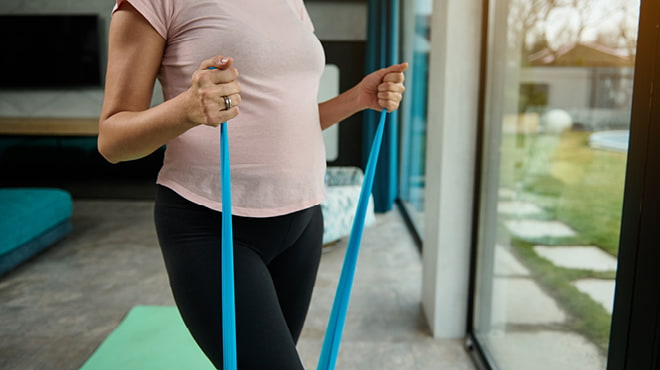
Years ago, weightlifting was thought to be reserved solely for bodybuilders and athletes. However, there has been significant research on the medical benefits of lifting weights. Everyone benefits from stronger bones and muscles. Plan to incorporate weight training into your routine, regardless of your age, ability or fitness level.
Weight training is a type of strength training that uses weights for resistance. This could be weight machines or free weights, like dumbbells or barbells, at home or a gym. It stresses and strengthens your muscles over time.
Who can benefit from weight training?
It doesn't matter if you are 19 or 90, run marathons, or struggle to climb stairs; weight training can benefit everyone.
It helps build muscle, strengthens bones, improves balance and prevents injuries. Often, it is helpful for people with many chronic health conditions. Overall, it helps people feel better physically and mentally.
Weight training also has been shown to help improve:
- Blood pressure
- Blood sugar (diabetes)
- Brain health
- Bone density
- Cholesterol
- Chronic pain
- Heart disease
- Depression
- Metabolism
- Self-confidence
- Thinking and learning skills
- Weight management
Tips for getting started
Here are 10 key points to remember when considering beginning a new weight training routine:
1. Choose your equipment.
Many options are available, such as free weights, hand weights, weight machines and bands. Some exercises only use your body weight and don't require any equipment. The right choice depends on your budget and preference. They all work if used properly.
2. Warm up.
Cold muscles are more prone to injury, so consider warming up with a brisk walk for five to 10 minutes and dynamic stretching to start each training session.
3. Start light.
Start with light to moderate weights in the first few sessions. Starting light can prevent muscle soreness and lessen the chance of injury.
4. Increase weight slowly.
Gradually increasing the weight amount over a period of two to four weeks. Ten to 15 reps should become difficult as muscles tire and fatigue.
5. Pay attention to pain.
Proper weight training should reduce pain, not cause it. If you have sharp or shooting pain, stop doing that exercise. If done correctly, it also should help your bones, tendons, ligaments and muscles become stronger.
6. Lift slowly.
When lifting weights, do not use momentum. Most weight training injuries occur from swinging the weights, improper technique or lifting too heavy an amount of weight. Take about two seconds to lift the weight and four or more seconds to lower the weight. Training slower activates more muscle fibers in the targeted muscle, which will increase the benefits of strength training in the end.
7. Build in rest.
Work your muscles to fatigue on each exercise and then rest them for at least 48 hours. Lift weights two to three days a week for each muscle group.
8. Seek variety.
A good weight training program should include at least eight to 12 different exercises. These should target the major muscles of the legs, back, chest, abdomen, arms and shoulders.
9. Focus on one set.
Do at least one set on each exercise, paying attention to your form. Most people can get the results by doing one set of 10 to 15 reps of each exercise. Previously, researchers recommended at least two to three sets. However, recent research states that one set, done properly, can be just as effective as multiple sets. Multi-sets are OK if you have extra free time and enjoy spending time in the gym.
10. Breathe.
Remember always to maintain your breathing while you lift. Breathe out through the hardest part of the exercise.
If you're new to weight training, talk with a personal trainer or another member of your health care team about the best weight training exercises for you and learn about proper form and technique to avoid injury.
Here are some sample routines for a total-body workout:
Being healthy can be hard, but the free Journey to Wellness program makes it easier. Cut through the noise with this free, self-guided program for individual and employer use.
Mackenzie Long is a licensed personal trainer in Sports Medicine and Physical Therapy in La Crosse and Onalaska, Wisconsin.