• Patient Portal
  • Pay Bill
  • Request Appointment
MCHS_Logo_2024_BLACK
    • Cardiology (Heart)
    • Gastroenterology & Hepatology (Digestive Care)
    • Neurosurgery
    • Obstetrics & Gynecology (OB-GYN)
    • Oncology (Cancer)
    • Orthopedics & Orthopedic Surgery (Bones)
    • Primary Care
    • Spine Care
    • Sports Medicine
    • Urology
    View all specialties
  • Providers
  • Minnesota

    • Albert Lea
    • Austin
    • Blooming Prairie
    • Butterfield
    • Cannon Falls
    • Fairmont
    • Faribault
    • Lake City
    • Mankato
    • New Prague
    • Northfield
    • Owatonna
    • Plainview
    • Red Wing
    • Sherburn
    • St. James
    • Waseca
    • Zumbrota

    Wisconsin

    • Arcadia
    • Barron
    • Bloomer
    • Chetek
    • Chippewa Falls
    • Eau Claire
    • Ellsworth
    • Glenwood City
    • Holmen
    • La Crosse
    • Menomonie
    • Mondovi
    • Onalaska
    • Osseo
    • Prairie du Chien
    • Rice Lake
    • Sparta
    • Tomah
    mchsmap Map view
    • VirtualCare
      Virtual Care
    • SameDayCare
      Same-Day Care
    • PrimaryCare
      Primary Care
    • SpecialtyCare
      Specialty Care
    • View all care options
    • PrimaryCare
      Billing & Insurance
    • SameDayCare
      Financial Assistance
    • VirtualCare
      Price Transparency
  • Health & Wellness Resources
    • Patient Portal
    • Pay Bill
    • Request Appointment
    MCHS_Logo_2024_BLACK
        • Cardiology (Heart)
        • Gastroenterology & Hepatology (Digestive Care)
        • Neurosurgery
        • Obstetrics & Gynecology (OB-GYN)
        • Oncology (Cancer)
        • Orthopedics & Orthopedic Surgery (Bones)
        • Primary Care
        • Spine Care
        • Sports Medicine
        • Urology
        • View all specialties
      • Providers
        • Minnesota

        • Albert Lea
        • Austin
        • Blooming Prairie
        • Butterfield
        • Cannon Falls
        • Fairmont
        • Faribault
        • Lake City
        • Mankato
        • New Prague
        • Northfield
        • Owatonna
        • Plainview
        • Red Wing
        • Sherburn
        • St. James
        • Waseca
        • Zumbrota

          Wisconsin

        • Arcadia
        • Barron
        • Bloomer
        • Chetek
        • Chippewa Falls
        • Eau Claire
        • Ellsworth
        • Glenwood City
        • Holmen
        • La Crosse
        • Menomonie
        • Mondovi
        • Onalaska
        • Osseo
        • Prairie du Chien
        • Rice Lake
        • Sparta
        • Tomah
        • Map view
        • Virtual Care
        • Same-Day Care
        • Primary Care
        • Specialty Care
        • View all care options
        • Billing & Insurance
        • Financial Assistance
        • Price Transparency
      • Health & Wellness Resources
      Posted By
      Caitlin Terpstra RD

      Caitlin Terpstra, RDN, LD

      Nutrition

      Recent Posts

      • child in kitchen handing food to another
        Speaking of Health
        Fuel the school day with an A+ breakfast
        October 15, 2024
      • Roasted cauliflower
        Speaking of Health
        Cauliflower: A versatile nutrition superstar
        February 17, 2023
      • Roasted vegetables
        Speaking of Health
        Eat the rainbow for good health
        June 03, 2022
      Featured Topics
      • Behavioral Health
      • Cancer
      • Children's Health (Pediatrics)
      • Exercise and Fitness
      • Heart Health
      • Men's Health
      • Neurosurgery
      • Obstetrics and Gynecology
      • Orthopedic Health
      • Weight-loss (Bariatric) Surgery
      • Women's Health
      Speaking of Health
      Friday, March 17, 2023

      Kale: Discover the 'secret powers' of this superfood
      Topics in this Post
      • Nutrition
      • Get healthy recipes and tips
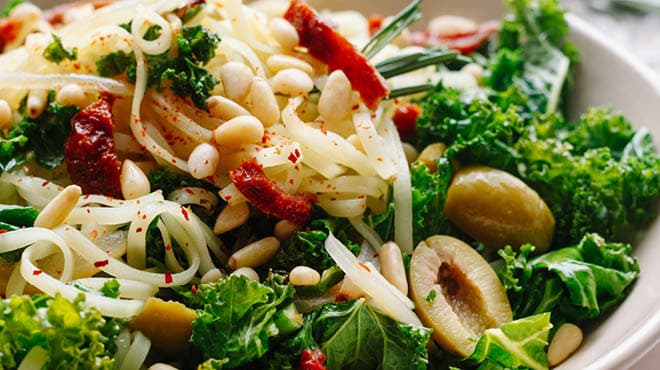
      Kale salad

      Although it may seem like it, kale isn't a new vegetable. Thomas Jefferson experimented with several varieties of kale at his Monticello estate in the early 1800s. It's long been popular in northern Europe and now throughout the U.S. Before becoming a popular salad green, kale was often used in restaurants as a decorative garnish on plates.

      But over the past 10 years, the popularity of kale has skyrocketed. You've probably heard it referred to as a superfood. Here's more about its not-so-secret powers.

      Types of kale include:

      • Curly kale is of one the most common types with its pungent, peppery flavor. The bright-green leaves look like ruffles.
      • Dinosaur kale is also common. Its narrow, green leaves are wrinkly like dinosaur skin, which are attached to a firm stem that should be removed.
      • Redbor kale has ruffled leaves ranging in color from a deep red to purple.
      • Russian kale is harder to find. It has flat, fringed leaves ranging in color from green to red to purple. Its flavor is more sweet and peppery.

      Kale is available at local farmers markets and grocery stores. You can buy it in fresh bunches or prewashed and trimmed in bags. Local gardeners also plant kale for their own use on the dinner table.

      How do you pick out the best bunch of kale? The leaves and stalks should be dark green with small- to medium-sized leaves free of any yellowing or browning. Kale leaves should be firm and dry, not wilted and mushy.

      To store kale, wrap it loosely and store in the fridge for up to five days. If kept longer, the leaves tend to toughen.

      Nutrition superstar

      Kale is a nutrition superstar due to the amounts of vitamins A, B6, C, K, folate, fiber, carotenoids and manganese it contains. One cup of raw kale has just 20 calories. The Department of Agriculture's MyPlate recommends any child and adult who is over the age of 9 eat at least 1.5–2 cups of dark-green vegetables every week.

      Kale is a member of the cruciferous vegetable family, along with cauliflower, Brussels sprouts, cabbage, broccoli, collard greens, kohlrabi, rutabaga, turnips and bok choy. These vegetables offer health benefits, including supporting the immune system, regulating blood pressure and potentially reducing the risk of various types of cancer.

      People who may need to avoid or limit kale intake are those who form oxalate-containing kidney stones or take the blood thinners Coumadin or warfarin. Be sure to check with your health care professional or dietitian if you have questions.

      Adding kale to your meals

      Kale holds its texture well when cooked, and it can be steamed, stir-fried, roasted or eaten raw. You can blend it into smoothies, roast it to make kale chips, wilt it into soup, mash it with potatoes or turn it into pesto. You may want to remove the middle rib by hand or with kitchen shears because it can be tough, fibrous and taste bitter.

      A good goal is to fill half your plate with fruits and vegetables every day. Here's where kale can work its superpower. Tear leaves and blend them into your morning smoothie, or use the whole kale leaf as a replacement for tortillas or bread when making a sandwich. For extra crunch, replace your regular potato chips with some roasted kale chips. For dinner, make a hearty bean soup with kale.

      Try this meatless version of a Midwestern favorite made with kale:

      Cream of wild rice soup

      Serves 4

      • 1/2 tablespoon canola oil
      • 1 1/2 cups diced yellow onion
      • 1 cup diced carrot
      • 1 cup diced celery
      • 2 cloves garlic, minced
      • 1 1/2 cups chopped kale
      • 1 tablespoon minced parsley
      • 2 cups low-sodium vegetable stock
      • 1 teaspoon fennel seeds, crushed
      • 1 teaspoon ground black pepper
      • 1 cup unsalted prepared white beans (or about half of a 15.5 ounce can of white beans, rinsed and drained)
      • 2 cups 1% milk
      • 1/2 cup wild rice, cooked

      In a soup pot over medium heat, add canola oil, and saute onion, carrot, celery and garlic until lightly brown. Stir in kale, parsley, stock and spices. Bring to a boil. In a blender, puree beans with milk. Add bean mixture to soup, bring to simmer and add rice. Cook for 30 minutes. Serve in warmed bowls.

      Nutrition for 1 serving (2 cups): 236 calories, 4 grams total fat, 1 gram saturated fat, 0 grams trans fat, 2 grams monounsaturated fat, 6 milligrams cholesterol, 180 milligrams sodium, 38 grams total carbohydrates, 7 grams fiber, 12 grams total sugars, 0 grams added sugars, 12 grams protein.

      Caitlin Terpstra is a dietitian in Nutrition in Owatonna, Minnesota.
      Topics in this Post
      • Nutrition
      • Get healthy recipes and tips

      Related Posts

      Tacos on plate Celebrate Cinco de Mayo with lighter versions of popular dishes
      young-woman-stretching-before-run How nutrients impact physical performance
      Fresh fruit on wood skewers Not just for the fair: Lunch on a stick
      Mayo Clinic Health System
      About Us
      Careers
      Volunteer
      Donate
      Contact Us
      Patient Care
      Patients & Visitors
      Classes & Events
      Mayo Clinic Connect
      Mayo Clinic
      Resources
      Referrals
      Community Resources
      Financial Assistance
      Price Transparency
      Compliance
      Notice of Nondiscrimination
      Notice of Privacy Practices
      No Surprises Act
      Terms of Use
      Manage Cookie
      Privacy Policy
      © 2018 - 2026 Mayo Clinic Health System