• Patient Portal
  • Pay Bill
  • Request Appointment
MCHS_Logo_2024_BLACK
    • Cardiology (Heart)
    • Gastroenterology & Hepatology (Digestive Care)
    • Neurosurgery
    • Obstetrics & Gynecology (OB-GYN)
    • Oncology (Cancer)
    • Orthopedics & Orthopedic Surgery (Bones)
    • Primary Care
    • Spine Care
    • Sports Medicine
    • Virtual Care 24/7
    View all specialties
  • Providers
  • Minnesota

    • Albert Lea
    • Austin
    • Blooming Prairie
    • Butterfield
    • Cannon Falls
    • Fairmont
    • Faribault
    • Lake City
    • Mankato
    • New Prague
    • Northfield
    • Owatonna
    • Plainview
    • Red Wing
    • Sherburn
    • St. James
    • Waseca
    • Zumbrota

    Wisconsin

    • Arcadia
    • Barron
    • Bloomer
    • Chetek
    • Chippewa Falls
    • Eau Claire
    • Ellsworth
    • Glenwood City
    • Holmen
    • La Crosse
    • Menomonie
    • Mondovi
    • Onalaska
    • Osseo
    • Prairie du Chien
    • Rice Lake
    • Sparta
    • Tomah
    mchsmap Map view
    • VirtualCare
      Virtual Care
    • SameDayCare
      Same-Day Care
    • PrimaryCare
      Primary Care
    • SpecialtyCare
      Specialty Care
    • View all care options
    • PrimaryCare
      Billing & Insurance
    • SameDayCare
      Financial Assistance
    • VirtualCare
      Price Transparency
    • Hometown Health
    • Classes & Events
    • Self-guided wellness programs
    • Mayo Clinic Connect
    • Community Resources
  • Patient Portal
  • Pay Bill
  • Request Appointment
MCHS_Logo_2024_BLACK
Search Mayo Clinic Health System
    • Cardiology (Heart)
    • Gastroenterology & Hepatology (Digestive Care)
    • Neurosurgery
    • Obstetrics & Gynecology (OB-GYN)
    • Oncology (Cancer)
    • Orthopedics & Orthopedic Surgery (Bones)
    • Primary Care
    • Spine Care
    • Sports Medicine
    • Virtual Care 24/7
    • View all specialties
  • Providers
    • Minnesota

    • Albert Lea
    • Austin
    • Blooming Prairie
    • Butterfield
    • Cannon Falls
    • Fairmont
    • Faribault
    • Lake City
    • Mankato
    • New Prague
    • Northfield
    • Owatonna
    • Plainview
    • Red Wing
    • Sherburn
    • St. James
    • Waseca
    • Zumbrota

      Wisconsin

    • Arcadia
    • Barron
    • Bloomer
    • Chetek
    • Chippewa Falls
    • Eau Claire
    • Ellsworth
    • Glenwood City
    • Holmen
    • La Crosse
    • Menomonie
    • Mondovi
    • Onalaska
    • Osseo
    • Prairie du Chien
    • Rice Lake
    • Sparta
    • Tomah
    • Map view
    • Virtual Care
    • Same-Day Care
    • Primary Care
    • Specialty Care
    • View all care options
    • Billing & Insurance
    • Financial Assistance
    • Price Transparency
    • Hometown Health
    • Classes & Events
    • Self-guided wellness programs
    • Mayo Clinic Connect
    • Community Resources
Posted By
Anthony Furlano, D.O.

Anthony Furlano, D.O.

Birthing Centers, Family Medicine, Prenatal Care, Primary Care

Featured Topics
  • Behavioral Health
  • Cancer
  • Children's Health (Pediatrics)
  • Exercise and Fitness
  • Heart Health
  • Men's Health
  • Neurosurgery
  • Obstetrics and Gynecology
  • Orthopedic Health
  • Weight-loss (Bariatric) Surgery
  • Women's Health
Speaking of Health
Thursday, October 13, 2016

Hunting and heart attacks

Topics in this Post
  • Heart Health
  • Exercise and Fitness
  • Men's Health
  • Women's Health
hearthunting

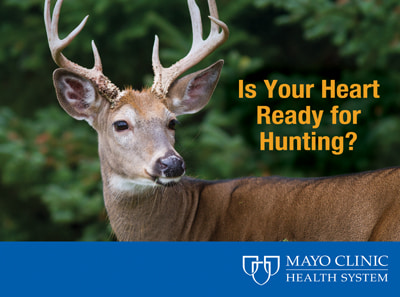
It' still dark outside. The weather is bitter and cold. It's the perfect day to get together with good friends, reflect on life, walk the countryside and bring home that trophy buck or prize pheasant. You're fully prepared this year. Your scope is right on, you've scouted out the perfect spot for your stand and you've been punching paper targets for months. But is your heart ready?

Like any sport, hunting requires participants to train, focus, and be mentally and physically fit for the activity required. When hunters aren't in shape, their trips sometimes can end in tragedy. Hunting may be the most demanding physical exertion some hunters experience all year.

Dragging a heavy deer through the snow or brush can be exceptionally stressful on the heart. Studies show that excitement of sighting a deer can send a hunter's heart rate soaring. This excitement, combined with strenuous hunting activity, can put a physically unfit hunter at risk of a heart attack.

Know the warning signs

Knowing the warning signs of a heart attack can help alleviate the severity of the attack. Many people fail to recognize a heart attack because the symptoms can be vague and easy to pass off as a less serious problem. Knowing the signs allows you to act fast.

A heart attack does not always produce a giant, immobilizing pain or a sharp stabbing pain. The body sends signals that the heart is starving for oxygen by these warning signals:

  • An uncomfortable pressure, fullness, squeezing or pain in the center of the chest for more than two minutes.
  • Chest pain that spreads to the shoulders, neck, or arms.
  • Dizziness, fainting, sweating, nausea and shortness of breath may also occur.

Sometimes these signals may subside only to return later, possibly with greater discomfort and danger. The American Heart Association recommends that anyone experiencing chest pain and discomfort for two minutes or more should call 911 or go to a hospital immediately. Expect the person to deny the possibility of having a heart attack, but insist on prompt action. Do not ignore any warning signal — act immediately.

Before your trip, find out which hospitals provide 24-hour service in the area you will be hunting. Select the nearest facility in advance so there will be no delay in finding a hospital. Inform your family and friends so they know where to go in case of an emergency. Don't worry about a false alarm — just get to the hospital. Reacting quickly could save your life as you have only a couple of hours to save that heart muscle.

Smoking, family history of heart disease, diabetes, obesity, and high cholesterol all could be causes of a heart attack. Now is the best time to get a checkup from your doctor so you know if you're ready and what you can do to prepare. In addition to giving you a heart risk assessment, physicians also can give advice on exercise programs to get you ready for dragging out that buck or for those long prairie walks seeking the elusive pheasant.

Learn more about your heart:

  • Read more about heart health.
  • Discover unique signs and risks for women and heart disease.
  • Get the facts. Download an infographic about high blood pressure.
  • Do you know your risk of developing diabetes? Take the American Diabetes Association's 60-second test to find out.

Anthony Furlano, D.O., is a Family Medicine physician in Eau Claire, Wisconsin.
Topics in this Post
  • Heart Health
  • Exercise and Fitness
  • Men's Health
  • Women's Health

Related Posts

Wicker stars with Christmas lights 5 tips for navigating changing holiday traditions
Nadia Malik MD The importance of a primary care provider
Women talking around a laptop Women and heart disease: Understanding unique signs, risks
Mayo Clinic Health System
About Us
Careers
Volunteer
Donate
Contact Us
Patient Care
Patients & Visitors
Classes & Events
Mayo Clinic Connect
Mayo Clinic
Resources
Referrals
Community Resources
Financial Assistance
Price Transparency
Compliance
Notice of Nondiscrimination
Notice of Privacy Practices
No Surprises Act
Terms of Use
Manage Cookie
Privacy Policy
© 2018 - 2026 Mayo Clinic Health System