• Patient Portal
  • Pay Bill
  • Request Appointment
MCHS_Logo_2024_BLACK
    • Cardiology (Heart)
    • Gastroenterology & Hepatology (Digestive Care)
    • Neurosurgery
    • Obstetrics & Gynecology (OB-GYN)
    • Oncology (Cancer)
    • Orthopedics & Orthopedic Surgery (Bones)
    • Primary Care
    • Spine Care
    • Sports Medicine
    • Urology
    View all specialties
  • Providers
  • Minnesota

    • Albert Lea
    • Austin
    • Blooming Prairie
    • Butterfield
    • Cannon Falls
    • Fairmont
    • Faribault
    • Lake City
    • Mankato
    • New Prague
    • Northfield
    • Owatonna
    • Plainview
    • Red Wing
    • Sherburn
    • St. James
    • Waseca
    • Zumbrota

    Wisconsin

    • Arcadia
    • Barron
    • Bloomer
    • Chetek
    • Chippewa Falls
    • Eau Claire
    • Ellsworth
    • Glenwood City
    • Holmen
    • La Crosse
    • Menomonie
    • Mondovi
    • Onalaska
    • Osseo
    • Prairie du Chien
    • Rice Lake
    • Sparta
    • Tomah
    mchsmap Map view
    • VirtualCare
      Virtual Care
    • SameDayCare
      Same-Day Care
    • PrimaryCare
      Primary Care
    • SpecialtyCare
      Specialty Care
    • View all care options
    • PrimaryCare
      Billing & Insurance
    • SameDayCare
      Financial Assistance
    • VirtualCare
      Price Transparency
  • Health & Wellness Resources
    • Patient Portal
    • Pay Bill
    • Request Appointment
    MCHS_Logo_2024_BLACK
        • Cardiology (Heart)
        • Gastroenterology & Hepatology (Digestive Care)
        • Neurosurgery
        • Obstetrics & Gynecology (OB-GYN)
        • Oncology (Cancer)
        • Orthopedics & Orthopedic Surgery (Bones)
        • Primary Care
        • Spine Care
        • Sports Medicine
        • Urology
        • View all specialties
      • Providers
        • Minnesota

        • Albert Lea
        • Austin
        • Blooming Prairie
        • Butterfield
        • Cannon Falls
        • Fairmont
        • Faribault
        • Lake City
        • Mankato
        • New Prague
        • Northfield
        • Owatonna
        • Plainview
        • Red Wing
        • Sherburn
        • St. James
        • Waseca
        • Zumbrota

          Wisconsin

        • Arcadia
        • Barron
        • Bloomer
        • Chetek
        • Chippewa Falls
        • Eau Claire
        • Ellsworth
        • Glenwood City
        • Holmen
        • La Crosse
        • Menomonie
        • Mondovi
        • Onalaska
        • Osseo
        • Prairie du Chien
        • Rice Lake
        • Sparta
        • Tomah
        • Map view
        • Virtual Care
        • Same-Day Care
        • Primary Care
        • Specialty Care
        • View all care options
        • Billing & Insurance
        • Financial Assistance
        • Price Transparency
      • Health & Wellness Resources
      Posted By
      Taylor Beahrs, M.D.

      Taylor Beahrs, M.D.

      Orthopedics & Orthopedic Surgery (Bones), Sports Medicine

      Recent Posts

      • Showshoeing
        Speaking of Health
        Ankle instability causes and fixes
        December 13, 2022
      Featured Topics
      • Behavioral Health
      • Cancer
      • Children's Health (Pediatrics)
      • Exercise and Fitness
      • Heart Health
      • Men's Health
      • Neurosurgery
      • Obstetrics and Gynecology
      • Orthopedic Health
      • Weight-loss (Bariatric) Surgery
      • Women's Health
      Speaking of Health
      Friday, September 6, 2024

      How to step up to manage bunions

      Topics in this Post
      • Foot Health
      • Orthopedic Health
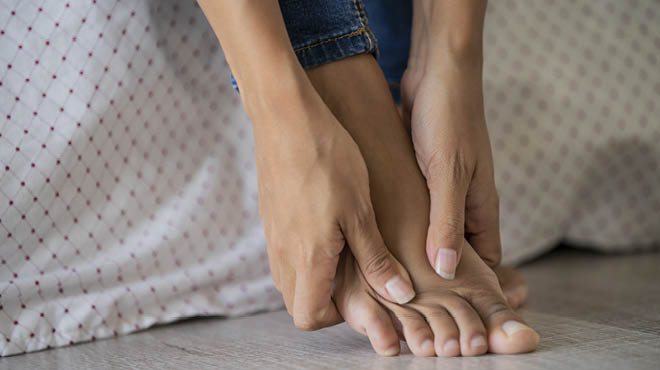
      Touching foot with hands

      Stylish shoes can add the finishing touch to an outfit and help you feel like you're putting your best foot forward. But those dressy shoes might not be the best for your feet — especially your toes.

      Shoes that are narrow, tight, pointed or high-heeled can push the tip of your big toes toward and over your smaller toes, causing bunions.

      Bunions are bulging, bony bumps at the base of your big toes. As the angle of your big toe worsens, the joint may become red, swollen and ache. Pain can occur in the joint and under the ball of your foot.
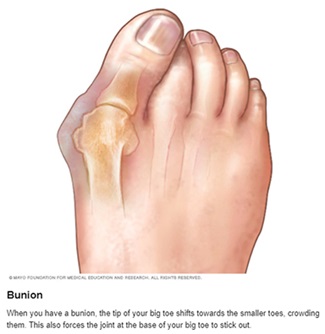
      Bunion

      Smaller bunions, called bunionettes or tailor's bunions, can form on the outer part of your foot at the base of your fifth toe.

      While your choice of shoes can contribute to bunions, other factors include:

      • Arthritis
      • Deformity at birth
      • Inherited foot anatomy
      • Injury

      Learn the steps to take to manage the pain of bunions or bunionettes.

      First step: Relief without surgery

      Typically, experiencing pain and not being able to wear stylish shoes or walk long distances lead people to seek care, usually with a podiatrist or orthopedic specialist.

      The first line of treatment is nonsurgical:

      • Evaluate your shoe choices and select bunion-friendly options. Choose shoes with a wider toe box — no pointy toes — that give your toes room to spread out and relieve the pressure on the bunion.
      • Give your shoes the "press" test to ensure there's a space between the tip of your big toe and the end of the shoe.
      • Take over-the-counter medications like acetaminophen, ibuprofen or naproxen or apply ice to relieve pain and swelling.
      • Try toe spacers that separate your toes and bunion guards that provide padding between the shoe and your aching joint.

      Second step: Consider surgery

      Keep in mind that bunion surgery isn't cosmetic surgery. The angle of your bunion may be severe, but surgery is not typically recommended unless it's giving you consistent pain that interferes with your daily activities.

      If your orthopedic specialist determines that surgery is your best option for pain relief, you'll undergo imaging that helps your surgeon choose the best surgical procedure and technique.

      The surgery may involve one or more procedures. These might be:

      • Joining the bones of your big toe joint permanently.
      • Realigning one or more bones in your forefoot to a more normal position to correct the abnormal angle of your big toe joint.
      • Removing swollen tissue from around the big toe joint.
      • Straightening your big toe by removing part of the bone.

      Third step: Recovery

      Each person's bunion surgery is different and so is their recovery. Be sure to talk with your surgeon about what to expect during the healing process. You may be able to walk on your foot right after the procedure, or you may need to avoid bearing weight on it while it heals. You may not be fully recovered for weeks or months.

      After surgery, the best way to prevent a bunion from reforming is to wear properly fitted shoes that conform to the shape of your feet without squeezing or pressing on any part of your foot.

      Next steps:

      • Check out an FAQ on foot care and health.
      • Learn more about bunions and bunionettes.
      • Read how to determine your foot arch type.
      • If you're a runner, check out how to get the best fit in your running shoes.

      Taylor Beahrs, M.D., specializes in orthopedic surgery and sports medicine, including foot and ankle surgery, in Mankato, Minnesota.

      Topics in this Post
      • Foot Health
      • Orthopedic Health

      Related Posts

      Showshoeing Ankle instability causes and fixes
      Baseball pitcher Helping athletes come back after a dislocated shoulder
      Mature couple folded hands meditation How to keep moving with arthritis
      Mayo Clinic Health System
      About Us
      Careers
      Volunteer
      Donate
      Contact Us
      Patient Care
      Patients & Visitors
      Classes & Events
      Mayo Clinic Connect
      Mayo Clinic
      Resources
      Referrals
      Community Resources
      Financial Assistance
      Price Transparency
      Compliance
      Notice of Nondiscrimination
      Notice of Privacy Practices
      No Surprises Act
      Terms of Use
      Manage Cookie
      Privacy Policy
      © 2018 - 2026 Mayo Clinic Health System