• Patient Portal
  • Pay Bill
  • Request Appointment
MCHS_Logo_2024_BLACK
    • Cardiology (Heart)
    • Gastroenterology & Hepatology (Digestive Care)
    • Neurosurgery
    • Obstetrics & Gynecology (OB-GYN)
    • Oncology (Cancer)
    • Orthopedics & Orthopedic Surgery (Bones)
    • Primary Care
    • Spine Care
    • Sports Medicine
    • Urology
    View all specialties
  • Providers
  • Minnesota

    • Albert Lea
    • Austin
    • Blooming Prairie
    • Butterfield
    • Cannon Falls
    • Fairmont
    • Faribault
    • Lake City
    • Mankato
    • New Prague
    • Northfield
    • Owatonna
    • Plainview
    • Red Wing
    • Sherburn
    • St. James
    • Waseca
    • Zumbrota

    Wisconsin

    • Arcadia
    • Barron
    • Bloomer
    • Chetek
    • Chippewa Falls
    • Eau Claire
    • Ellsworth
    • Glenwood City
    • Holmen
    • La Crosse
    • Menomonie
    • Mondovi
    • Onalaska
    • Osseo
    • Prairie du Chien
    • Rice Lake
    • Sparta
    • Tomah
    mchsmap Map view
    • VirtualCare
      Virtual Care
    • SameDayCare
      Same-Day Care
    • PrimaryCare
      Primary Care
    • SpecialtyCare
      Specialty Care
    • View all care options
    • PrimaryCare
      Billing & Insurance
    • SameDayCare
      Financial Assistance
    • VirtualCare
      Price Transparency
  • Health & Wellness Resources
    • Patient Portal
    • Pay Bill
    • Request Appointment
    MCHS_Logo_2024_BLACK
        • Cardiology (Heart)
        • Gastroenterology & Hepatology (Digestive Care)
        • Neurosurgery
        • Obstetrics & Gynecology (OB-GYN)
        • Oncology (Cancer)
        • Orthopedics & Orthopedic Surgery (Bones)
        • Primary Care
        • Spine Care
        • Sports Medicine
        • Urology
        • View all specialties
      • Providers
        • Minnesota

        • Albert Lea
        • Austin
        • Blooming Prairie
        • Butterfield
        • Cannon Falls
        • Fairmont
        • Faribault
        • Lake City
        • Mankato
        • New Prague
        • Northfield
        • Owatonna
        • Plainview
        • Red Wing
        • Sherburn
        • St. James
        • Waseca
        • Zumbrota

          Wisconsin

        • Arcadia
        • Barron
        • Bloomer
        • Chetek
        • Chippewa Falls
        • Eau Claire
        • Ellsworth
        • Glenwood City
        • Holmen
        • La Crosse
        • Menomonie
        • Mondovi
        • Onalaska
        • Osseo
        • Prairie du Chien
        • Rice Lake
        • Sparta
        • Tomah
        • Map view
        • Virtual Care
        • Same-Day Care
        • Primary Care
        • Specialty Care
        • View all care options
        • Billing & Insurance
        • Financial Assistance
        • Price Transparency
      • Health & Wellness Resources
      Posted By
      Kurt Jacobson, L.A.T.

      Kurt Jacobson, L.A.T.

      Sports Medicine

      Featured Topics
      • Behavioral Health
      • Cancer
      • Children's Health (Pediatrics)
      • Exercise and Fitness
      • Heart Health
      • Men's Health
      • Neurosurgery
      • Obstetrics and Gynecology
      • Orthopedic Health
      • Weight-loss (Bariatric) Surgery
      • Women's Health
      Speaking of Health
      Monday, July 8, 2024

      Brace for it: When to use an ankle brace
      Topics in this Post
      • Sports Medicine
      • Orthopedic Health
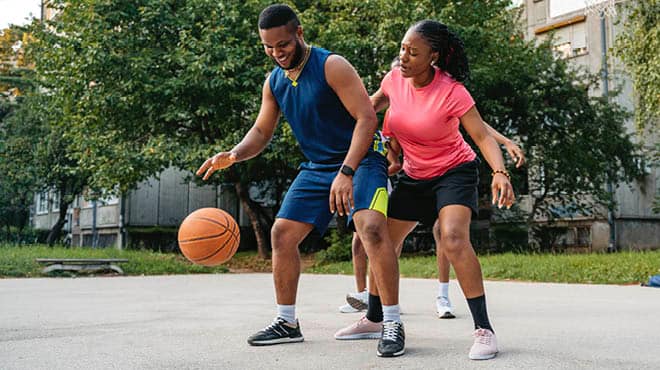
      People playing basketball

      In the early 1990s, ankle braces began appearing more often on sports courts and playing fields due to their improved designs. They also cost less than repeatedly taping an athlete's ankle.

      Now, ankle braces are available in various designs, including sport-specific options. But the goal is the same — to provide extra support after an injury or prevent an ankle sprain from occurring in the first place.

      Coaches, parents and athletes often ask if wearing an ankle brace is worthwhile. Research shows that high school-age athletes who use ankle braces experience fewer ankle injuries. However, ankle braces don't reduce the severity of ankle, knee or other lower-extremity injuries.

      How bracing works

      Bones, muscles and a network of ligaments and tendons form internal supports that keep your ankle stable, flexible and strong. Ligaments are tough bands of tissue that stabilize joints and help prevent excessive movement.

      Three main bones make up the ankle joint:

      • Tibia — the long shin bone in your lower leg that provides the main weight-bearing surface at the roof of the ankle joint
      • Fibula — the bone on the outside of the ankle that provides lateral and rotational stability
      • Talus — the bone that provides the lower cartilage in the ankle and connects the ankle to the foot, functioning like a hinge to flex your foot

      These internal supports link your foot all the way up to your hip. Ideally, they function as a unit.
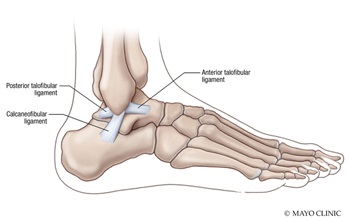
      Ankle anatomy illustration

      Ankle braces serve as external supports to limit certain motions, such as plantar flexion/inversion, which is the movement at the ankle joint that points the foot downward away from the leg and turns the foot inward.

      Braces also provide awareness of where your ankle joint is in space. For maximum effectiveness, ankle braces should fit comfortably in the shoes you wear during an activity, which also makes it more likely you'll wear the braces.

      Rehabilitation plays a key role in recovery

      If you do experience an ankle injury, weakness or instability, rehabilitation is a key component of your treatment plan. Often, when athletes still have ankle pain or aren't back to full function, it's because they haven't allowed enough time to heal properly. Rehabilitation providers specialize in balance, range of motion, strength and endurance, which are key therapy and training factors for recovery.

      Performing exercises as directed helps ensure a safe return to activity and lessens the likelihood of reinjury.

      Deciding if a brace is right for you

      Keep in mind that wearing an ankle brace isn't a 100% cure-all or guarantee against injuries. Your healthcare team can help you make an educated decision about whether an ankle brace is right for you.

      Next steps:

      • Check out this Sports Medicine consultation FAQ.
      • Find out what Sports Medicine has to offer.
      • Learn about ankle sprains and breaks.
      • Learn if you could benefit from an athletic trainer.
      • Read more about bracing.

      Kurt Jacobson is a licensed athletic trainer in Sports Medicine in Eau Claire, Wisconsin.
      Topics in this Post
      • Sports Medicine
      • Orthopedic Health

      Related Posts

      Carrying log on shoulder 6 benefits of ultrasonic energy shoulder procedure
      Man squatting holding recyclables Considering hip replacement? Learn about your surgical options
      John DiTulio Beat goes on for drummer with calcific tendonitis
      Mayo Clinic Health System
      About Us
      Careers
      Volunteer
      Donate
      Contact Us
      Patient Care
      Patients & Visitors
      Classes & Events
      Mayo Clinic Connect
      Mayo Clinic
      Resources
      Referrals
      Community Resources
      Financial Assistance
      Price Transparency
      Compliance
      Notice of Nondiscrimination
      Notice of Privacy Practices
      No Surprises Act
      Terms of Use
      Manage Cookie
      Privacy Policy
      © 2018 - 2026 Mayo Clinic Health System