• Patient Portal
  • Pay Bill
  • Request Appointment
MCHS_Logo_2024_BLACK
    • Cardiology (Heart)
    • Gastroenterology & Hepatology (Digestive Care)
    • Neurosurgery
    • Obstetrics & Gynecology (OB-GYN)
    • Oncology (Cancer)
    • Orthopedics & Orthopedic Surgery (Bones)
    • Primary Care
    • Spine Care
    • Sports Medicine
    • Urology
    View all specialties
  • Providers
  • Minnesota

    • Albert Lea
    • Austin
    • Blooming Prairie
    • Butterfield
    • Cannon Falls
    • Fairmont
    • Faribault
    • Lake City
    • Mankato
    • New Prague
    • Northfield
    • Owatonna
    • Plainview
    • Red Wing
    • Sherburn
    • St. James
    • Waseca
    • Zumbrota

    Wisconsin

    • Arcadia
    • Barron
    • Bloomer
    • Chetek
    • Chippewa Falls
    • Eau Claire
    • Ellsworth
    • Glenwood City
    • Holmen
    • La Crosse
    • Menomonie
    • Mondovi
    • Onalaska
    • Osseo
    • Prairie du Chien
    • Rice Lake
    • Sparta
    • Tomah
    mchsmap Map view
    • VirtualCare
      Virtual Care
    • SameDayCare
      Same-Day Care
    • PrimaryCare
      Primary Care
    • SpecialtyCare
      Specialty Care
    • View all care options
    • PrimaryCare
      Billing & Insurance
    • SameDayCare
      Financial Assistance
    • VirtualCare
      Price Transparency
  • Health & Wellness Resources
    • Patient Portal
    • Pay Bill
    • Request Appointment
    MCHS_Logo_2024_BLACK
        • Cardiology (Heart)
        • Gastroenterology & Hepatology (Digestive Care)
        • Neurosurgery
        • Obstetrics & Gynecology (OB-GYN)
        • Oncology (Cancer)
        • Orthopedics & Orthopedic Surgery (Bones)
        • Primary Care
        • Spine Care
        • Sports Medicine
        • Urology
        • View all specialties
      • Providers
        • Minnesota

        • Albert Lea
        • Austin
        • Blooming Prairie
        • Butterfield
        • Cannon Falls
        • Fairmont
        • Faribault
        • Lake City
        • Mankato
        • New Prague
        • Northfield
        • Owatonna
        • Plainview
        • Red Wing
        • Sherburn
        • St. James
        • Waseca
        • Zumbrota

          Wisconsin

        • Arcadia
        • Barron
        • Bloomer
        • Chetek
        • Chippewa Falls
        • Eau Claire
        • Ellsworth
        • Glenwood City
        • Holmen
        • La Crosse
        • Menomonie
        • Mondovi
        • Onalaska
        • Osseo
        • Prairie du Chien
        • Rice Lake
        • Sparta
        • Tomah
        • Map view
        • Virtual Care
        • Same-Day Care
        • Primary Care
        • Specialty Care
        • View all care options
        • Billing & Insurance
        • Financial Assistance
        • Price Transparency
      • Health & Wellness Resources
      Posted By
      Daisy Batista, M.D.

      Daisy Batista, M.D.

      Gastroenterology & Hepatology (Digestive Care)

      Recent Posts

      • Sitting and writing in notebook
        Speaking of Health
        Living with Crohn's disease or colitis
        January 24, 2023
      • Sitting holding arms around stomach
        Speaking of Health
        What’s the difference between inflammatory bowel disease and irritable bowel syndrome?
        July 06, 2022
      Featured Topics
      • Behavioral Health
      • Cancer
      • Children's Health (Pediatrics)
      • Exercise and Fitness
      • Heart Health
      • Men's Health
      • Neurosurgery
      • Obstetrics and Gynecology
      • Orthopedic Health
      • Weight-loss (Bariatric) Surgery
      • Women's Health
      Speaking of Health
      Wednesday, March 25, 2020

      Understanding your colon cancer screening options
      Topics in this Post
      • Gastrointestinal Health
      • Colorectal Health
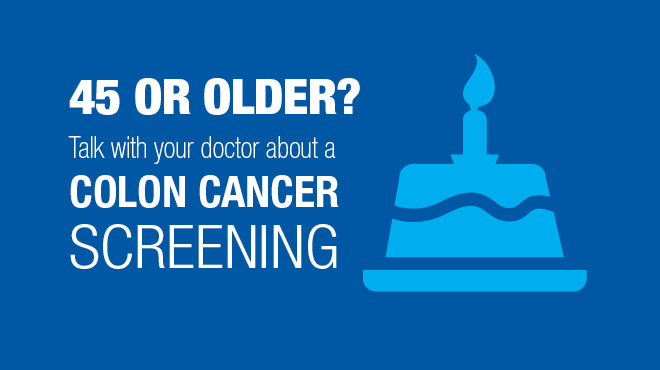
      45 or older? Talk with your doctor about colon cancer screening.

      Health care providers recommend certain screening tests for healthy people to look for signs of colon cancer or precancerous colon polyps. Finding colon cancer at its earliest stage provides the greatest chance for a cure. Screening has been shown to reduce your risk of dying of colon cancer. For people with average risk, screening begins around age 45. However, people with an increased risk should be screened sooner.

      You have options for which colon cancer screening test is best for your individual needs. Each has benefits and drawbacks. It's important that you talk with your health care provider about which is best for you.

      Let's review each option.

      Colonoscopy

      During a colonoscopy, a long, flexible tube called a colonoscope is interested into your rectum. A tiny video camera at the tip of the tube allows the doctor to view the inside of the entire colon and rectum. During a colonoscopy, the doctor also can collect tissue samples and remove polyps through the scope. Colonoscopy is considered the gold standard for colon cancer screening, and there are few risks associated with the procedure. When sedation is used, patients have little or no recollection of the exam.

      Watch a video on how a colonoscopy is performed:

      Colonoscopies have a poor reputation for having an uncomfortable preparation phase. However, several options can make this process tolerable. Be sure to talk with your provider about which options are best for you and your situation. Learn more about what to expect before, during and after a colonoscopy.

      Cologuard DNA stool test

      One newer method of detection is a stool DNA test called Cologuard. This test offers people 50 and older who are at average risk for colorectal cancer an easy-to-use screening test that they can complete in the privacy of their own home. A sample of your stool will be taken to look for blood or DNA changes in cells that suggest the presence of colorectal cancer or precancerous conditions.

      This test is safe and poses no risk. However, it is less sensitive than colonoscopy at finding precancerous polyps. One or 2 of every 20 people who undergo stool DNA testing will have a positive result, but no cancer or polyps will be found during a follow-up colonoscopy. Read FAQ about the stool DNA test.

      Watch a video about DNA stool testing:

      Learn the basics of colorectal cancer and 5 things you can do to keep your colon healthy.

      Daisy Batista, M.D., is gastroenterologist in La Crosse, Wisconsin.
      Topics in this Post
      • Gastrointestinal Health
      • Colorectal Health

      Related Posts

      Selecting fruit in grocery store 5 things you can do to keep your colon healthy
      Dog and woman sitting together Benefits of sedation-free colonoscopy
      Colon cancer affects men and women equally What to expect before, during a colonoscopy
      Mayo Clinic Health System
      About Us
      Careers
      Volunteer
      Donate
      Contact Us
      Patient Care
      Patients & Visitors
      Classes & Events
      Mayo Clinic Connect
      Mayo Clinic
      Resources
      Referrals
      Community Resources
      Financial Assistance
      Price Transparency
      Compliance
      Notice of Nondiscrimination
      Notice of Privacy Practices
      No Surprises Act
      Terms of Use
      Manage Cookie
      Privacy Policy
      © 2018 - 2026 Mayo Clinic Health System